
Understanding Why Short Study Sessions Work Better - Part 2
Ever find your mind wandering after studying for a long stretch? It's not your fault—our brains aren’t wired to stay focused for hours without breaks. Research shows that attention fades over time, making it harder to retain what you’re learning. By breaking your study time into shorter, focused sessions with regular breaks, you can stay sharp, avoid burnout, and remember more. Discover the science behind why short study bursts, like the 25-minute Pomodoro sessions, are more effective than cramming for hours on end.

Making Your Study Time More Efficient with the Pomodoro Method - Part 1
Preparing for a big exam can feel overwhelming, but studying smarter—not harder—is the key to success. The Pomodoro Method offers a simple, effective approach to managing your study time by breaking it into focused 25-minute sessions with planned breaks. This technique helps reduce stress, boost focus, and make even the most daunting tasks feel manageable. Learn how this method can transform the way you prepare for exams and keep your mind sharp and energized.
Boost Your Science Grades with 'G1 Science: Powering Up Knowledge' – The Perfect Study Companion!
Designed for G1 lower secondary students, G1 Science: Powering Up Knowledge is your new go-to podcast for mastering science concepts without the struggle of textbooks. Listen now to make your science revision engaging and effective!
What is the difference between Physics and Science (Physics)? 'O' Level 2024 comparison.
Parents would ask about the differences between pure sciences and combined sciences every year. Some tutors or other experienced parents would often say that there are not many differences between the two subjects, i.e. there are a few topics lesser in the combined science, or combined science questions are less difficult. The truth is that there are many subtopics and learning objects that are covered by the pure sciences but absent in the combined science.
What is the difference between Chemistry 6092 (2024) and Chemistry 6092 (2023)?
For the 2024 ‘O’/‘N’ level Chemistry, there are changes to the examination syllabus too. The changes are not as drastic as physics (i.e. there is no introduction of a new topic, but there are some new sub-topics).
The following sections will point out the details of the changes that are introduced.

What is the difference between Physics 6091 (2024) and Physics 6091 (2023)?
In the new 2024 ‘O’ / ‘N’ Level syllabus, there are some more significant changes. Two major changes are the removal of the topic “Temperature” and the introduction of the topic, “Radioactivity”. There are other subtle changes such as reshuffling of contents and also increasing or reduction in the difficulty level of certain learning objectives. The details can be found in the comparison of learning objectives between 6091 (2024) and 6091 (2023).
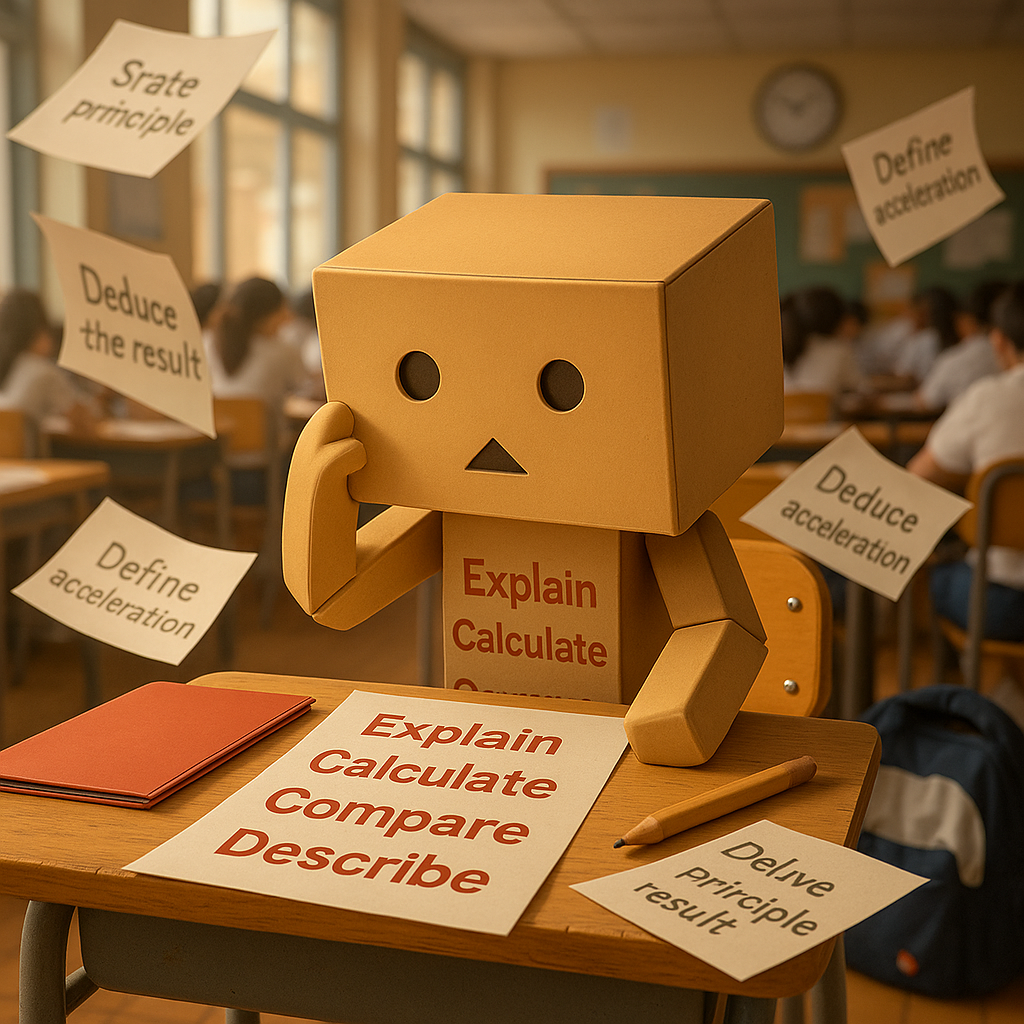
How to Answer Science Questions Properly: Mastering Exam Command Words (with Real O-Level Physics Examples)
Confused by exam command words like "Describe", "Explain", or "Calculate"? This guide breaks them down with real O-Level Physics examples (and Chemistry too!) to help you write smarter answers, gain marks, and feel more confident in science exams.

How Can Students Use Goal Setting to Achieve Academic Success in Singapore?
Discover how students in Singapore can improve academic results through goal setting. Learn to use SMART goals, build motivation, and reduce study stress with research-backed strategies.

Welcome to ChickenTimer
Discover how a chicken-shaped kitchen timer became a powerful tool for teaching time management, real learning, and life skills to O/N-Level students in Singapore.